Sizing Guide
What Size Dumpster Do I Need? A Room-by-Room Guide
The single most important decision you'll make when renting a dumpster is the size. Order too small and you're paying for a second haul; too big and you're paying for empty air. Here's how to get it right the first time.
Every week we talk to homeowners and contractors across Bel Air who ask the same question: what size dumpster do I actually need? It's a smart question, because sizing is where most of the money is won or lost on a rental. This guide walks you through it by project type, so you can call us already knowing roughly what you need — or at least able to describe your job clearly enough that we can nail it for you.
The five roll-off sizes, at a glance
Roll-off dumpsters are measured in cubic yards. Here in Bel Air we stock five sizes:
- 10 yard — about 3 to 4 pickup-truck loads. Best for small, heavy jobs and single rooms.
- 15 yard — about 5 to 6 pickup loads. The in-between size for mid-size projects.
- 20 yard — about 6 to 8 pickup loads. Our most popular all-rounder.
- 30 yard — about 9 to 12 pickup loads. For major renovations and construction.
- 40 yard — about 12 to 16 pickup loads. Our largest, for big builds and bulky debris.
You can see full dimensions on each size page, but volume is only half the story. The other half is weight — and it trips people up constantly.
Volume vs. weight: the mistake that costs money
Every dumpster rental includes a weight allowance built into the flat price. Go over it, and you'll see overage charges. This matters most with dense materials. A 20 yard container looks like it could hold a mountain of concrete — but fill it with concrete and you'd blow past the weight limit when it's barely a third full, and it couldn't be legally hauled.
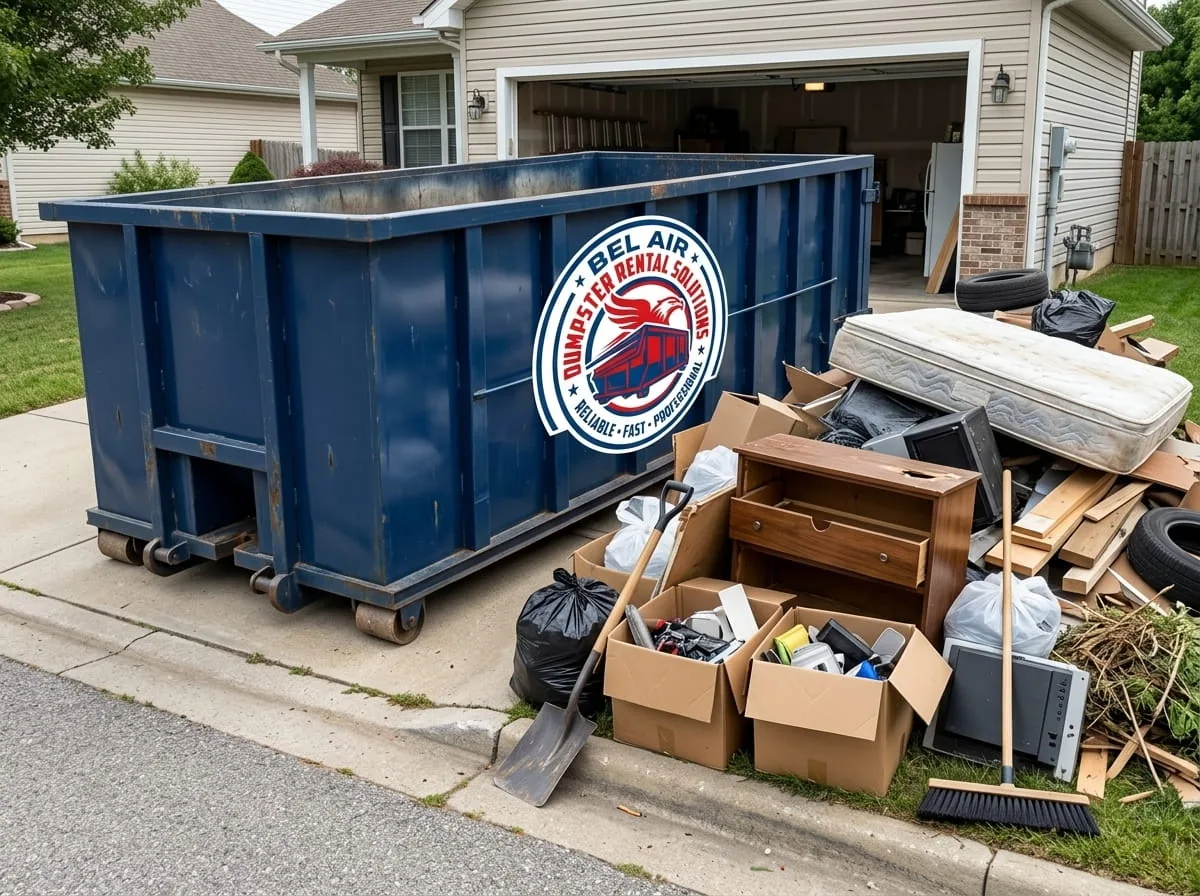
That's why, for heavy debris like concrete, brick, dirt, and roofing shingles, you often want a smaller container than the volume suggests. For light, bulky debris like furniture, cardboard, or demolition framing, you can go bigger. Keep that principle in mind as you read on.
Room-by-room and project-by-project
Bathroom remodel
A single bathroom gut — vanity, tile, tub, drywall — usually fits a 10 yard. There's a lot of dense material (tile, old cast iron) but not a huge volume.
Kitchen remodel
Kitchens generate more: cabinets, countertops, flooring, appliances (minus any with refrigerant). A 10 or 15 yard covers most kitchen jobs, depending on whether you're also removing flooring throughout adjacent rooms.
Single room or flooring project
Ripping carpet, laminate, or hardwood from one or two rooms fits a 10 yard. Doing a whole house of flooring pushes you toward a 15 or 20 yard.
Garage, basement, or attic cleanout
A packed two-car garage or a full basement typically fills a 15 yard. If you've got decades of accumulation, step up to a 20 yard to be safe.
Whole-house cleanout
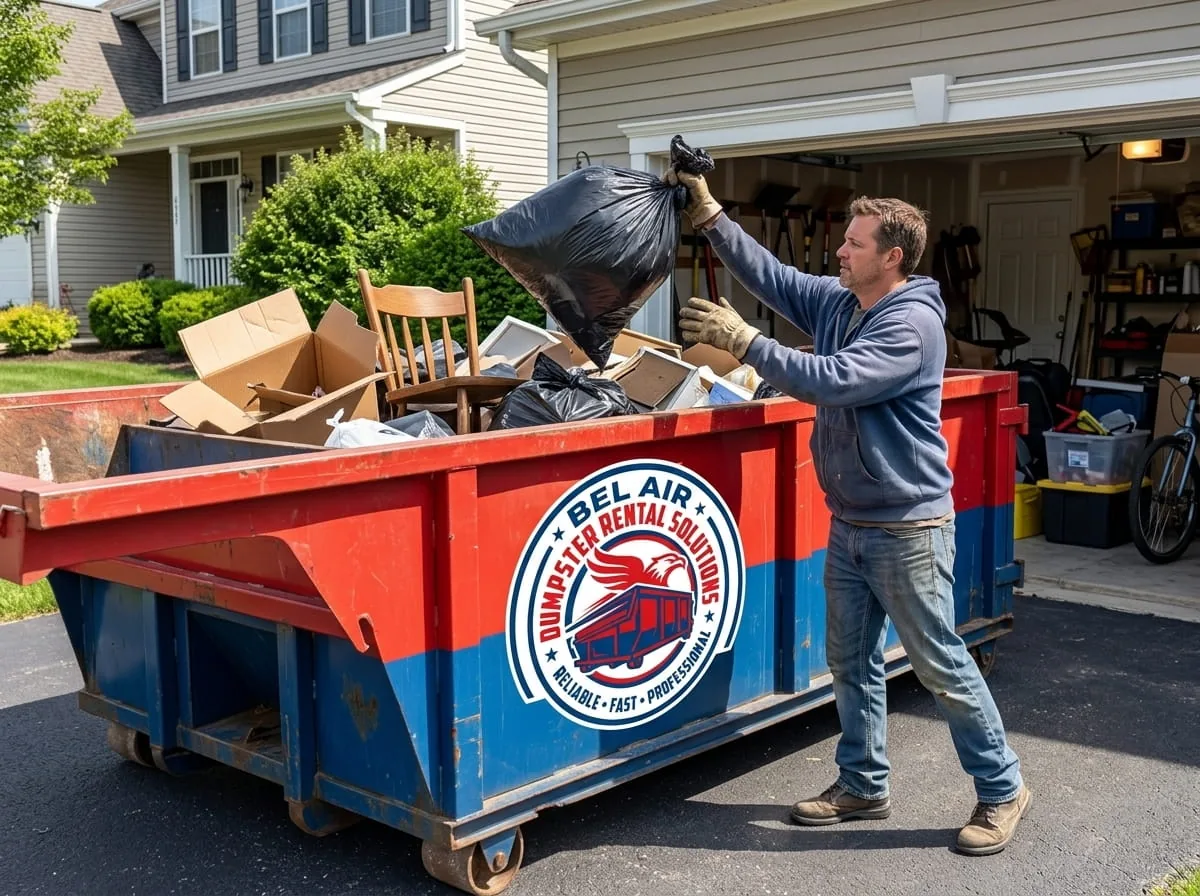
Clearing an entire home — furniture, belongings, the works — is the classic 20 yard job. Larger homes or estate cleanouts may need a 30 yard or a swap. See our cleanout service for more.
Roofing tear-off
Because shingles are so heavy, most residential re-roofs use a 10 or 15 yard — sized by the number of squares, not the volume. Our roofing size guide goes deep on this.
Concrete, brick, or dirt
Almost always a 10 yard, filled to a marked line. Heavy material hits the weight limit fast. See our concrete and heavy debris service.
Major renovation or new construction
Full-home renovations, additions, and new builds generate serious volume of mixed debris. Reach for a 30 or 40 yard, and plan for swaps on bigger jobs. Our construction service handles this daily.
A simple rule of thumb
If you're genuinely torn between two sizes for a light load, size up — the price difference is small compared to the cost of a second rental. If you're torn on a heavy load, call us first, because weight limits change the math entirely. Either way, a two-minute phone call saves you from the two most expensive mistakes in this business.
Don't forget driveway space
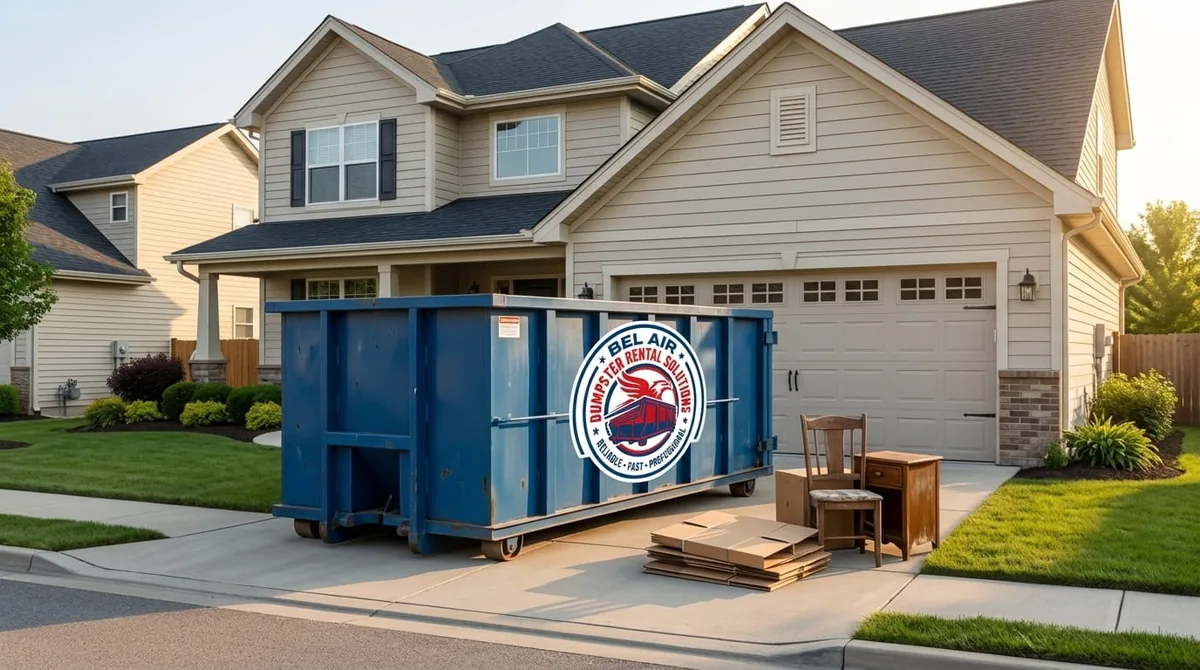
Volume and weight tell you which container fits your debris. You also need to make sure it fits your property. The 10 through 20 yard containers share a similar footprint and slot into a standard Bel Air driveway with room to spare. The 30 and 40 yard are the same length but much taller — the footprint doesn't grow, so if a 20 fits, a 40 usually fits too. What you really need is clearance for the truck to back in, lift, and set the container down, plus a straight, reasonably level spot. When you call, describe your driveway and any tight corners or low branches, and we'll confirm the fit before we roll.
A quick word on weight allowances
Here's how the weight math actually works. Say your rental includes a two-ton allowance. Two tons is 4,000 pounds — which sounds like a lot until you're throwing in old plaster, tile, and a few kitchen appliances. General household junk and furniture are light and rarely test the limit. But mixed demolition debris adds up faster than people expect, and anything masonry-based blows through it. If your load leans heavy, tell us, and we'll either size down to a container matched to a heavier allowance or set expectations on overage so there are no surprises. This is the single most common reason a bill comes in higher than a customer planned — and it's completely avoidable with one honest conversation.
Roll-off vs. bagster vs. trailer
You'll see a few alternatives to a roll-off dumpster, and each has a narrow use case. A collapsible dumpster bag holds a fraction of what even a 10 yard does and is only worth it for a tiny job. Renting a trailer and hauling debris yourself means you're doing the loading, the driving, the transfer-station fees, and the unloading — and you're limited by what your vehicle can tow. For any project generating real debris, a roll-off wins on volume, on your back, and on your weekend. The disposal is handled, and the container comes to you.
Five questions to answer before you order
- What's the project, and roughly how many rooms or square feet does it touch?
- Is the debris mostly light (furniture, wood) or heavy (tile, concrete, shingles)?
- Where will the container sit, and is that spot clear and accessible?
- How long do you need it — a weekend, or a few weeks?
- Are there any prohibited items you'll need to handle separately?
Have those five answers ready and any dumpster company can serve you quickly. Have them ready for us, and we'll turn them into the right size and a flat quote in about two minutes.
Still not sure? That's what we're here for
You don't have to figure this out alone. Describe your project — what you're clearing, how big the space is, what kind of material — and we'll tell you exactly which container fits and quote it flat. We size Bel Air projects every single day, and getting it right is genuinely easier for us than guessing is for you.
Working on a project in Bel Air or Harford County? Call (443) 356-4414 and we'll help you choose the right dumpster size and give you a flat, all-in quote — delivery, pickup, and disposal included.
Answers
Common questions
What's the most common dumpster size for homeowners?
The 20 yard. It handles whole-house cleanouts and larger remodels while still fitting a standard driveway. For heavy debris, the 10 yard is the standard pick.
Is it better to get a bigger dumpster than I need?
For light debris, sizing up slightly is smart insurance against a second haul. For heavy debris like concrete or shingles, no — weight limits mean a bigger container just risks overage fees. Call us if you're unsure.
Can you help me choose a size over the phone?
That's one of the most useful things we do. A quick description of your project is all we need to recommend the right container and quote it flat.
Keep reading
Related guides & services
Ready when you are
Ready to rent a dumpster in Bel Air?
Skip the guesswork — call and we'll size your project and quote it flat in minutes.
📞 (443) 356-4414