Local Guides
Storm Debris Cleanup: A Practical Guide for East Maryland
Severe thunderstorms, straight-line winds, and the tail end of tropical systems all reach East Maryland. When one of them takes down half your treeline or peels shingles off the roof, here's how the cleanup actually works.

Cleanup after a storm is different from a planned project. There's no time to research, the debris is a mix of everything at once, and half the neighborhood is trying to sort out the same problem on the same weekend. A little advance knowledge makes the whole thing faster.
Know what the city will and won't take
This is the single most useful thing to understand up front. The City of Bel Air's Public Works crews collect yard debris and bulky household items from city residents on a weekly schedule, and for ordinary storm limbs that may be all you need. But the city is explicit that debris generated by a contractor — tree service, roofer, remodeler — is the contractor's responsibility to remove, not the city's.
So the practical dividing line is this: if you and a chainsaw handled it yourself and the pile is modest, municipal pickup may cover you. If you hired a tree crew, or the volume is well beyond a normal week's yard waste, you need a container. Plenty of homeowners find this out only after a pile sits at the curb for two weeks.
What a roll-off handles well after a storm
Storm cleanup usually produces four streams, and a roll-off handles most of them: tree limbs and brush, roofing debris like torn shingles and underlayment, fencing and siding, and water-damaged interior material — drywall, carpet, insulation, and ruined furniture if water got inside.
Mention the mix when you call. Whole tree trunks and large stumps are usually handled separately because of weight and how they're processed, and soaked carpet and drywall are much heavier than their dry equivalents. We'd rather size the container correctly than have you discover the problem at the weigh-in.
Sizing when you can't see the end of the job
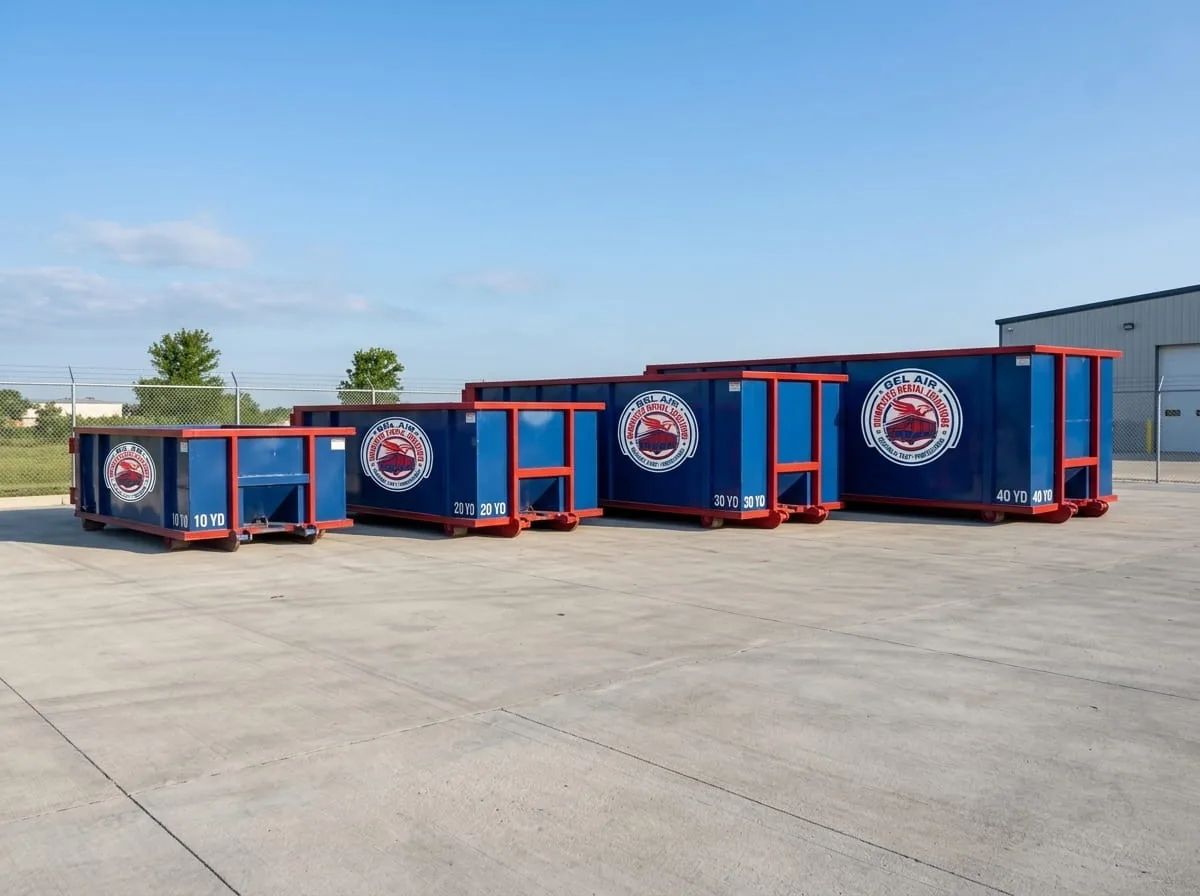
Storm damage is famously hard to estimate because it's spread across the property rather than confined to one room. As a rough guide: a yard's worth of downed limbs and fence panels usually fits a 20 yard. A roof tear-off plus yard debris generally wants a 30. A house that took water inside — where you're gutting flooring, drywall, and furniture — often needs a 30 with a swap, or a 40.
When in doubt after a storm, size up. Second hauls are slower to schedule in the week after severe weather because every hauler in Harford County is running flat out.
Photograph everything before it goes in
If you're filing an insurance claim, document the damage thoroughly before the debris disappears into a container — wide shots of the property, close-ups of specific damage, and pictures of the debris pile itself. Adjusters work from evidence, and a cleaned-up yard with no photographs is a harder claim to make. It costs ten minutes and can be worth a great deal.
It's also worth checking your policy on debris removal. Many homeowner policies include some coverage for it as part of a claim, which means the container may be a reimbursable expense rather than out-of-pocket.
Call early — genuinely early
The morning after a significant storm, container demand across the region spikes. Everyone calls at once, and equipment gets committed quickly. If you know you'll need a roll-off, call before you've finished assessing the damage rather than after. We can adjust the size later far more easily than we can conjure a container on a fully booked day.
Watch out for storm-chasing contractors
Severe weather brings out-of-town crews into the area, some good and some not. Before you hand anyone a deposit for tree or roof work, confirm they're licensed and insured, get the scope in writing, and be wary of anyone demanding full payment up front or pressuring you to sign immediately. This isn't our line of work, but we see the aftermath often enough to think it's worth saying.
Safety before speed
Don't load anything near a downed power line, and don't assume a line is dead. Leave leaning trees and limbs under tension to a professional — spring-loaded wood is genuinely dangerous. And when you're loading the container, keep the weight low and spread out rather than piling everything at one end.
When you're ready, call us and describe what the storm left behind. We'll tell you honestly what size fits, what needs to be handled separately, and when we can be there.
Working on a project in Bel Air or Harford County? Call (443) 356-4414 and we'll help you choose the right dumpster size and give you a flat, all-in quote — delivery, pickup, and disposal included.
Answers
Common questions
Can I put tree limbs and brush in a dumpster?
Yes — limbs, brush, and yard debris are fine in a standard roll-off. Very large trunks and stumps are usually handled separately because of weight, so mention them when you call.
Will the city pick up my storm debris instead?
For city residents, Bel Air Public Works collects yard debris and bulky items weekly, which may cover a modest pile. But debris left by a contractor — a tree service or roofer — is the contractor's responsibility, not the city's, and won't be collected.
How fast can you deliver after a storm?
We move as fast as we can, but demand spikes region-wide right after severe weather. Call as early as possible — the sooner you're on the schedule, the sooner you're cleaned up.
Keep reading
Related guides & services
Ready when you are
Ready to rent a dumpster in Bel Air?
Skip the guesswork — call and we'll size your project and quote it flat in minutes.
📞 (443) 356-4414